


Entropia
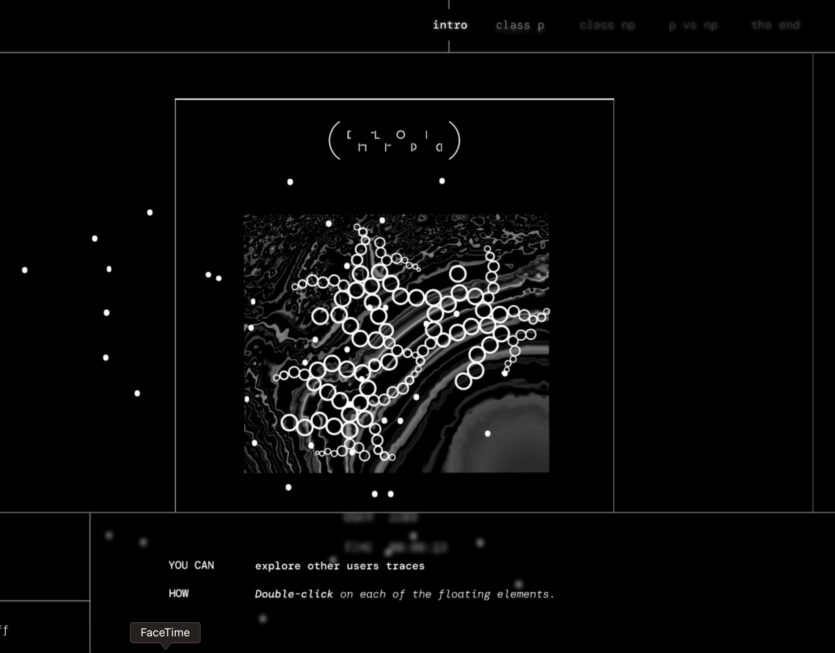
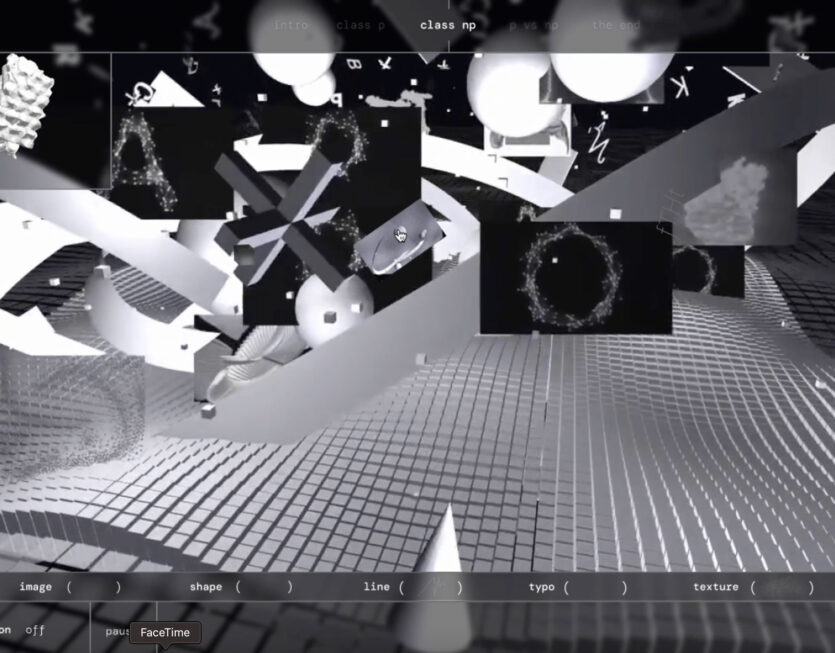
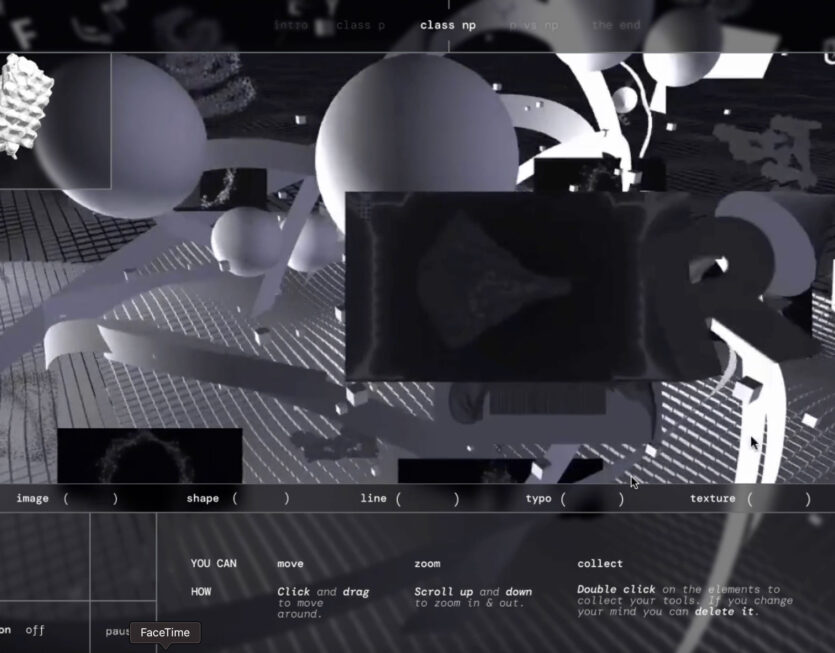
Is it possible for human beings to collaborate creatively with the computational mechanism? Can the intuition of a non-expert become the next step toward a conceptual rupture in an unsolved mathematical problem that threatens the foundations of modern science? Should the pursuit of knowledge begin with the rigor of the given or with the unreasoned intensity of the indeterminate? Do we accept the embedded randomness of algorithmic systems, or do we recognize a primacy in the heterogeneous, volatile judgment of human perception? To what extent does the logical discipline of an algorithm guarantee its value, and at what point does visualization cease to be an aesthetic supplement and become an epistemological tool for generating meaning? The Entropia constitutes an experimental, meta-theoretical, digital event: a condition that surpasses mathematical rationality, dismantles the classical demand for demonstrability, and transforms uncertainty into a productive, creative factor. Entropia is understood as a living field of co-genesis, where the user’s unpredictable choice is co-shaped by the computational response of the system. It emerges through a sequence of non-predefined participations, through the multiplicity of interventions, through the irreverent encounter between mathematical structures and design-driven visuality. Here, the user is not a receiver but a co-creator. They do not observe; they infuse the question with their own idiosyncrasy. They do not analyze mathematical classes; they experience their oscillation. They become co-responsible for the mutation of the P vs NP problem, which ceases to exist as a logical exercise and is transformed into an aesthetic process, an ongoing visual becoming without beginning or end. Every gesture, every minimal input, is recorded as a trace within this continuously unfolding organic system. The proof is not articulated; it is lived. Knowledge is not acquired; it happens as experience. Entropia, therefore, emerges as a methodology of the unknown. An aesthetic of discontinuity. A cognitive challenge that does not seek a solution, but a participatory co-formation. And perhaps, in the delicate intersection between algorithmic rationalism and aesthetic indeterminacy, between the artificial and the human, between order and chaos, what lies is not the answer, but the very essence of the question as an act of creation.
Ilektra Vouza | GR
Ilektra Vouza is a creator and researcher working at the intersection of art, science, and technology. With a background in mathematics and specialization in digital design and cultural theory, her practice treats creation as a form of research and a method for engaging with complex systems and contemporary realities. Driven by curiosity and a commitment to interdisciplinary thinking, her work embraces critical inquiry and continuous exploration while resisting rigid boundaries. Moving between industry practice and research, she bridges applied design with theoretical and experimental investigation. This dual approach enables the development of projects that operate both as functional solutions and conceptual explorations. Design is treated as a reflective medium for generating new forms of understanding and addressing complex societal, technological, and cultural challenges. According to her, art and science are interconnected systems of thought and action, contributing to collective understanding, social responsibility, and a more conscious, sustainable, and deeply human future.