



Pinus Pinea
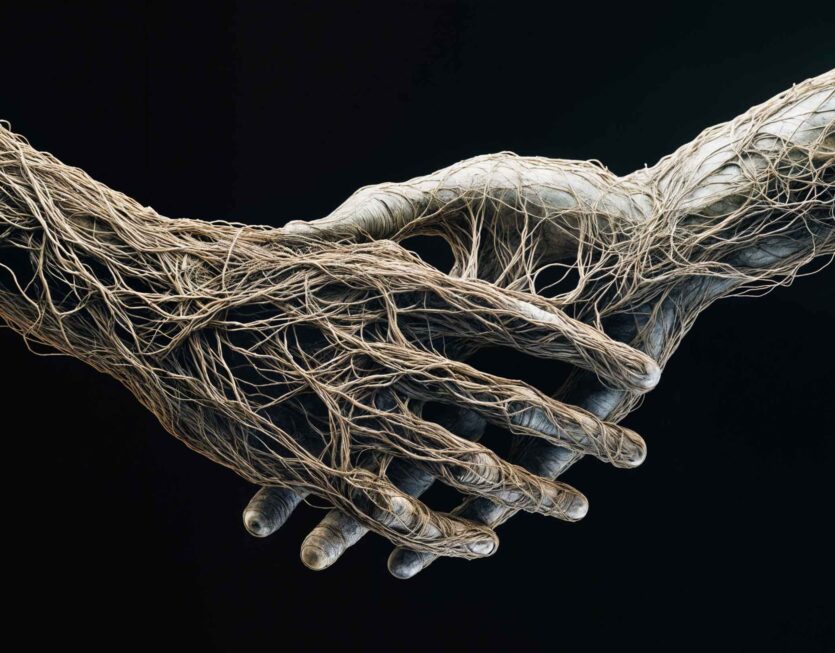
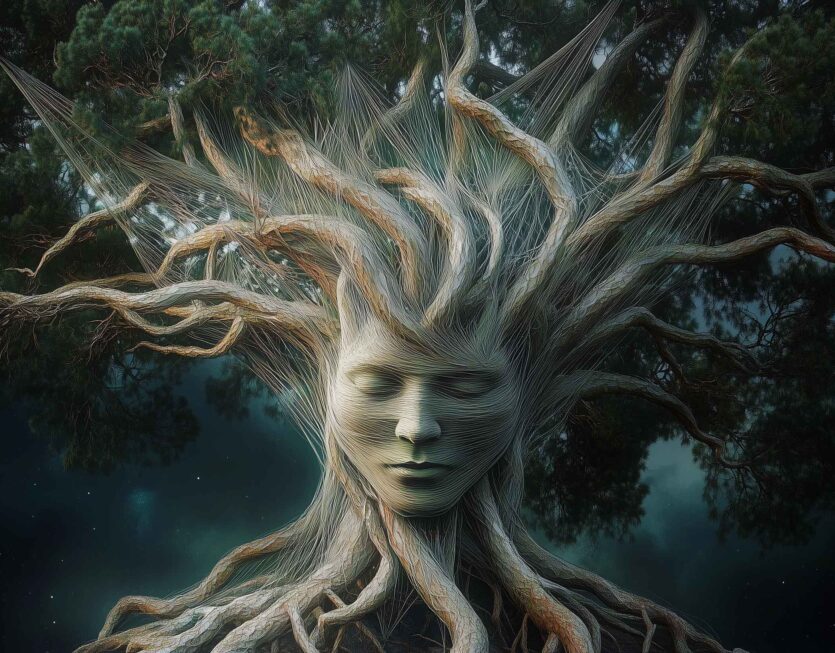
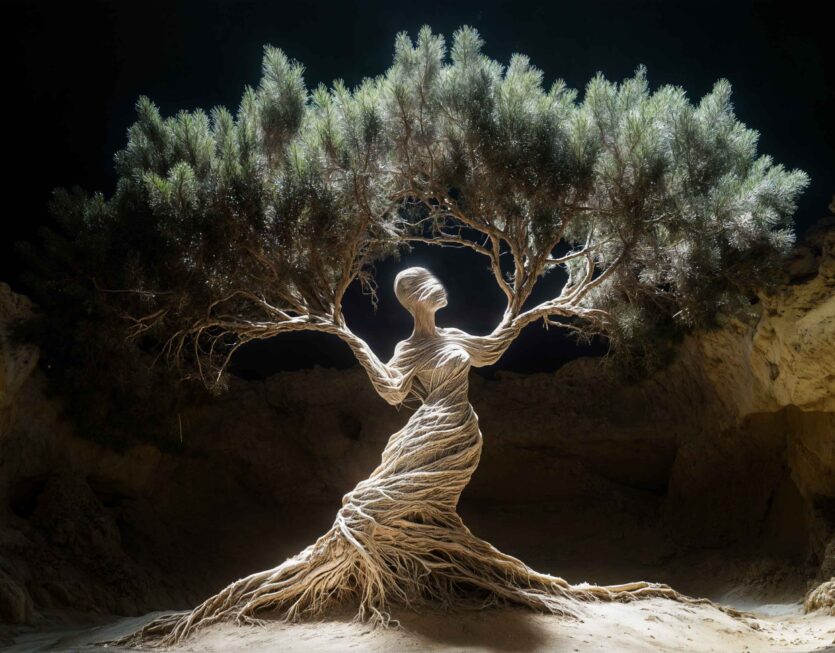
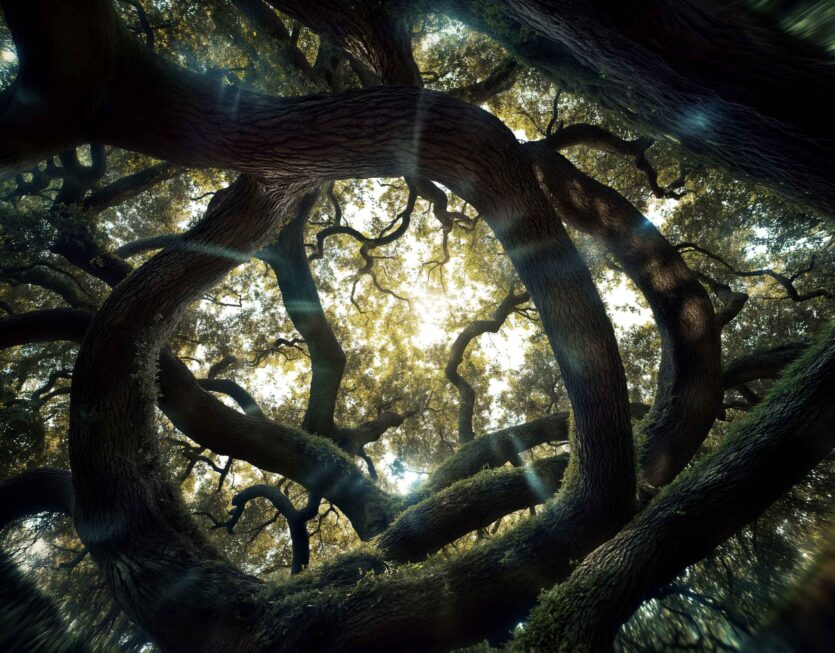
Pinus Pinea – AV Talk stems from a question that is as simple as it is unsettling: what can a tree we once believed eternal tell us today? The Pinus pinea—an icon of the Mediterranean and a familiar presence in the Roman landscape—becomes here an interlocutor. Not a postcard symbol, but a living body, traversed by time, history, climate crisis, and biological threats. Developed within the European project CO-VISION, the work short-circuits artistic practice, scientific research, and local knowledge, building a layered narrative made of sound, movement, and literary memory. The pine is not “represented”: it is listened to, inhabited, and restaged as a sensitive organism. Between immersive soundscapes, performance, and cultural traces, Pinus Pinea – AV Talk opens a space of perception: environmental change not as abstract data, but as a concrete, emotional, shared experience. An invitation to look—and listen—differently at what we thought we knew.
Simone Arcagni, Delfina Stella, Vincenzo Pizzi and Lorenza Liguori | IT
Simone Arcagni is a professor at IULM University in Milan, a consultant and curator of digital culture. He collaborates with «Il Sole24Ore», «FilmTV», «Otto e mezzo», «the Italian Review», «LMDP (Le meraviglie del possibile)» and Digital World (Rai) and keeps the blog “Postdigitale” (“Il Sole24Ore”). He is a scientific advisor to ANICA’s Union of Publishers and Digital Creators, editor-in-chief of the scientific journal «ES Journal» and guest curator for the 2026 edition of Biennale Tecnologia. He directs OnLive Campus and Metalab in Naples. Among the exhibitions he has curated: Cinema and AI, NFT | Cinema, Past Futures, #FacceEmozioni (with Donata Pesenti Campagnoni). Among his books: Visioni digitali (Einaudi), L’Occhio della macchina (Einaudi), Zona oscura (Luiss University Press), L’algoritmo di Babele (with Andrea Colamedici) (Solferino).
Delfina Stella (PhD), she is a dancer and researcher active in the field of arts pedagogy. Through choreography, research on movement, writing and toy creation she creates actions and formative and performative contexts that intertwine being and doing, researching – in practice and theory – how the languages of the body and dance can be tools of coexistence and enhancement of cultural and environmental heritage. Since 2015 she has led dance and movement courses and workshops for all ages and worked as an interpreter for national and international projects. From 2019 to 2024 she worked as an assistant, dancer and researcher with Virgilio Sieni. Since 2020 she has been part of the pedagogical team of Choronde Progetto Educativo. Currently she works as a performer, teacher and choreographer on independent projects. He publishes and edits books and articles on dance and its possible presence in an interdisciplinary field.
Vincenzo Pizzi is a music producer, sound designer, and founder of Pyteca+, a label and creative studio blending electronic music, sound design, and licensing for high-end audiovisual experiences. He graduated with honors in Sound Design from IED Rome and currently teaches Sound Design and Fashion Film Direction at university level. Active in the international audiovisual scene, he has created compositions and sound design for brands including Fendi, Versace, Gucci, The North Face, Chanel, Ralph Lauren, Vogue, YSL Beauty, and Red Bull. Alongside this, he develops site-specific installations and sound environments for institutions such as Videocittà, Balloon Museum, Kunstkraftwerk Leipzig, and Visioni Parallele. His work combines electronic precision with organic sensitivity, exploring the relationship between natural and artificial. His productions have been featured in Mixmag, XLR8R, i-D, Vice, and Rai Radio 3. Through Pyteca+, he expands his practice across music production, sound branding, and audiovisual synchronization, shaping sound as both language and design.
Lorenza Liguori is visual designer from Italy living in Milan. In her works, objects with often indefinite shapes come to life in an imaginary universe, in which landscapes become contexts to host small creatures from other worlds. The use of different materials plays a fundamental role in aesthetic research. The fusion of colors, substance and form is the main key to obtain a three-dimensional object that can live and survive in the space in which it’s generated. Often even forms of our world, such as faces and people are used to remind us that there is always a connection between our dimension and this universe in which it seems that everything is possible. In this research, the artist tries to create and share her own microcosm with the goal of letting the viewer enter her imagination.